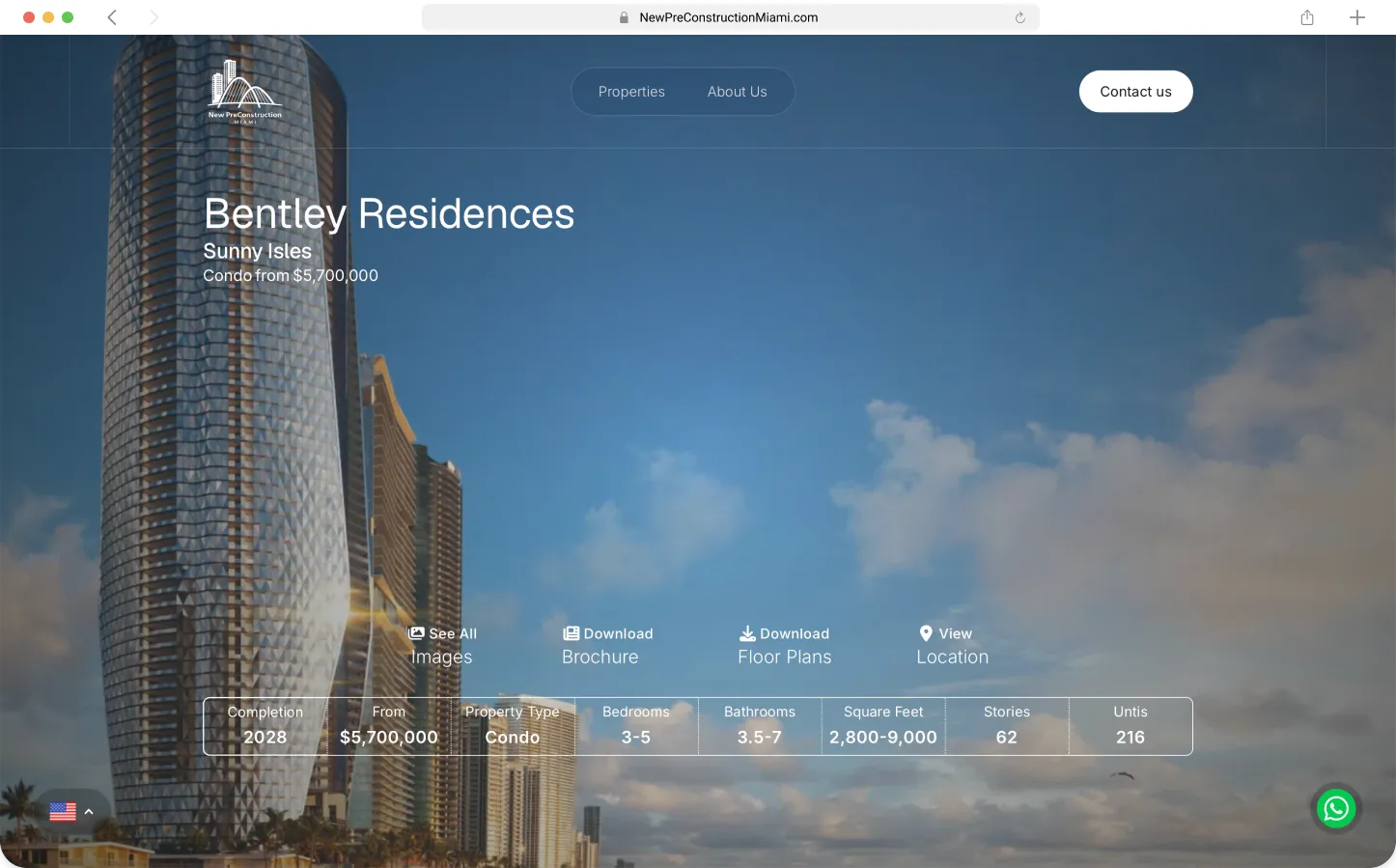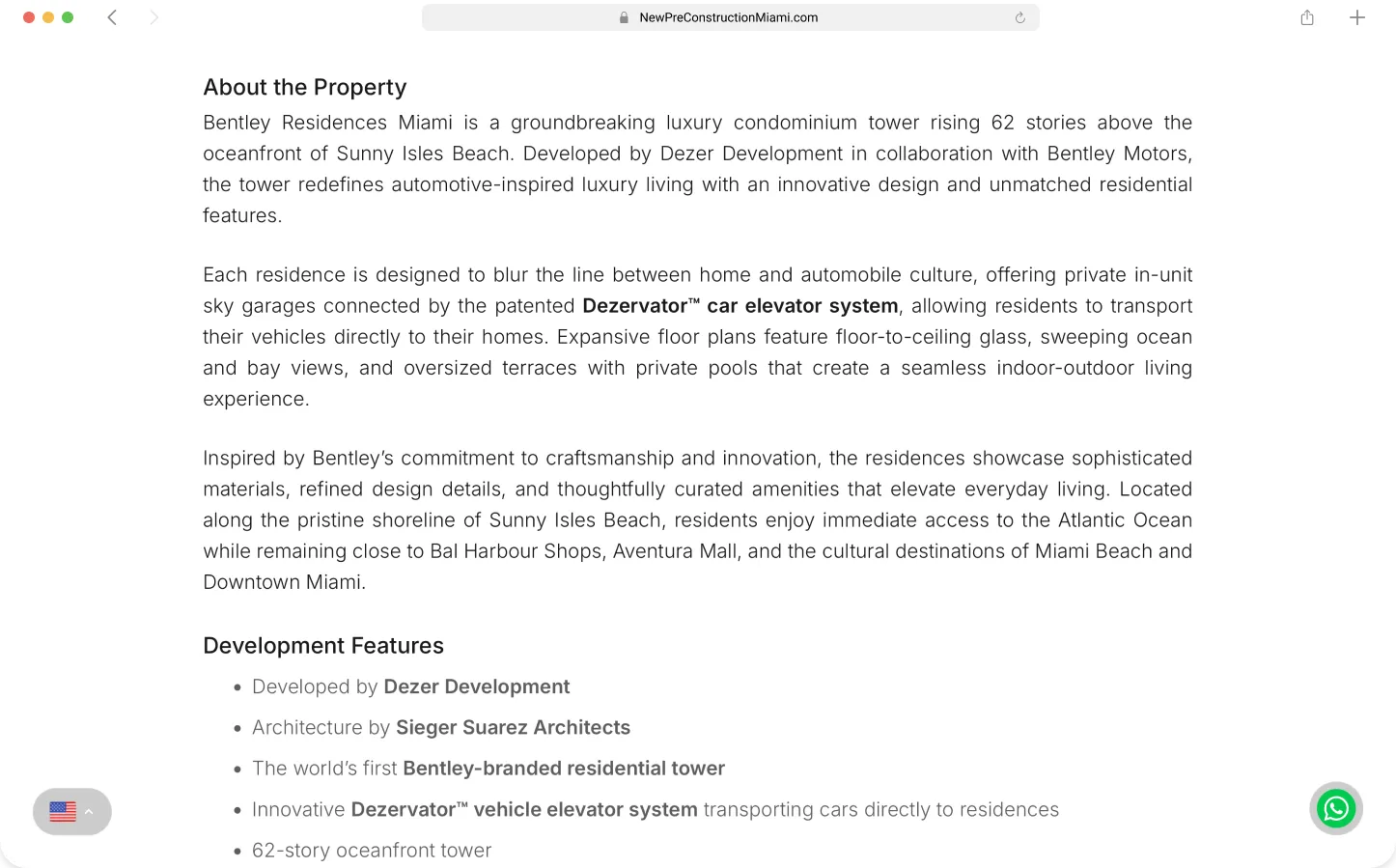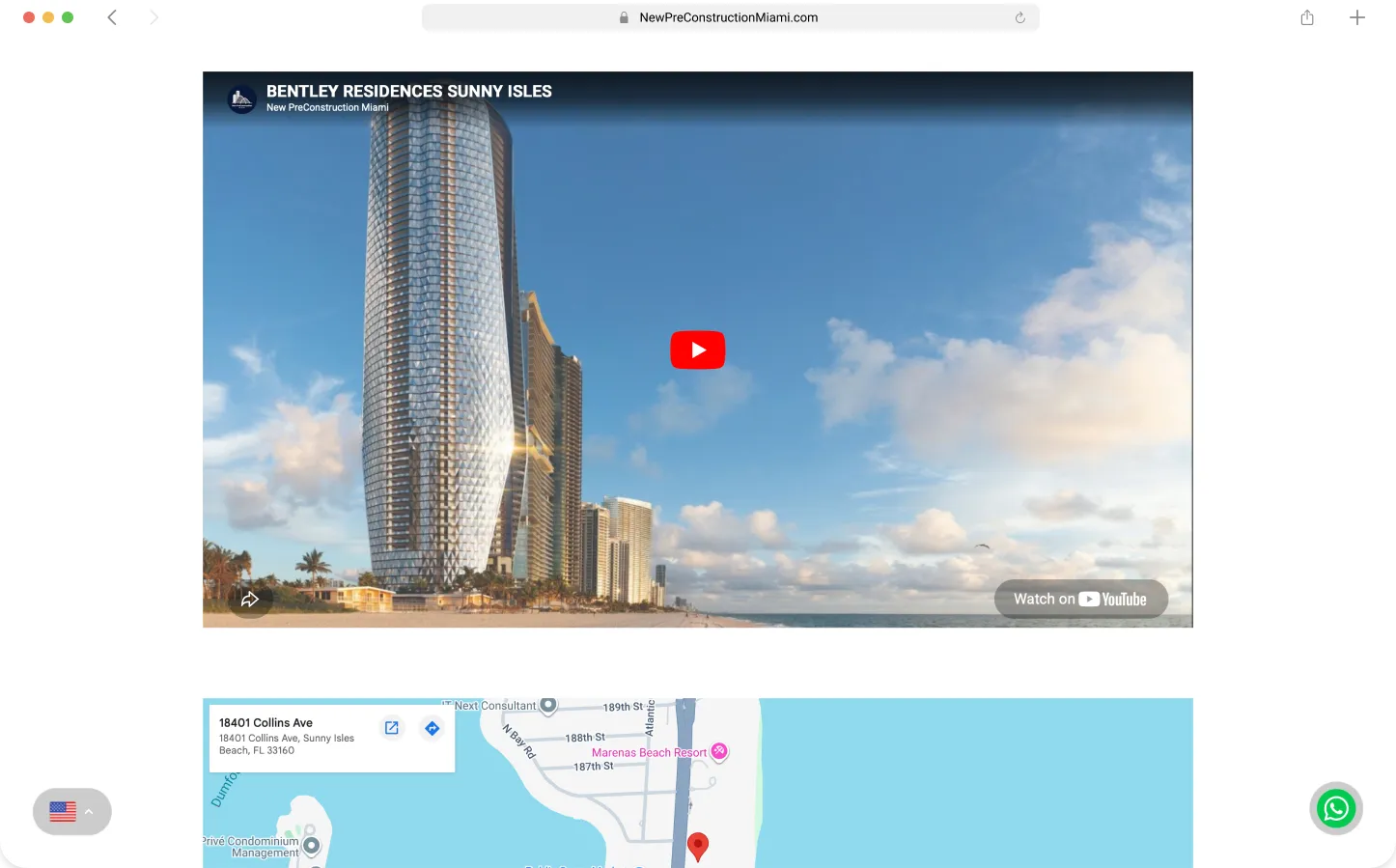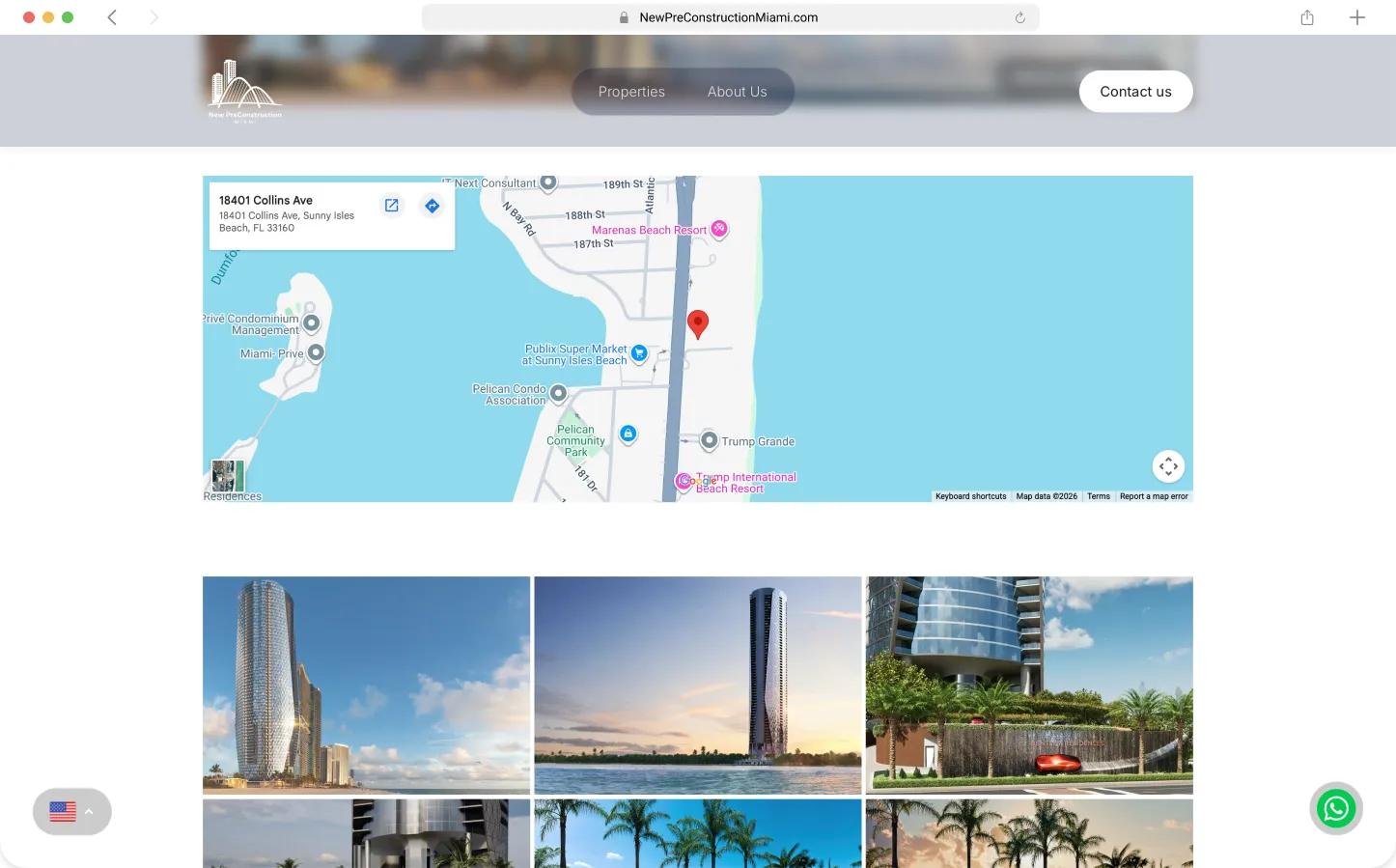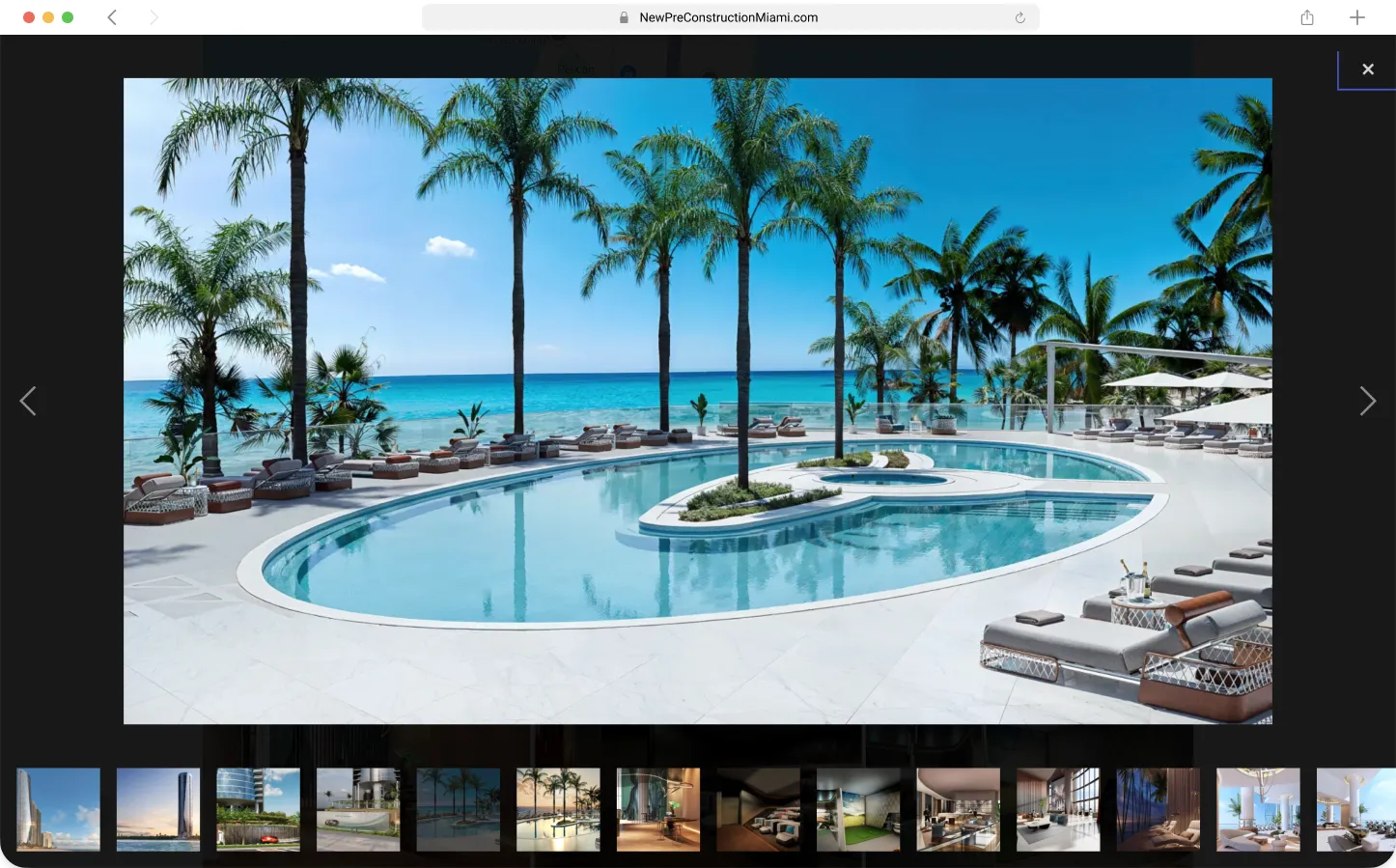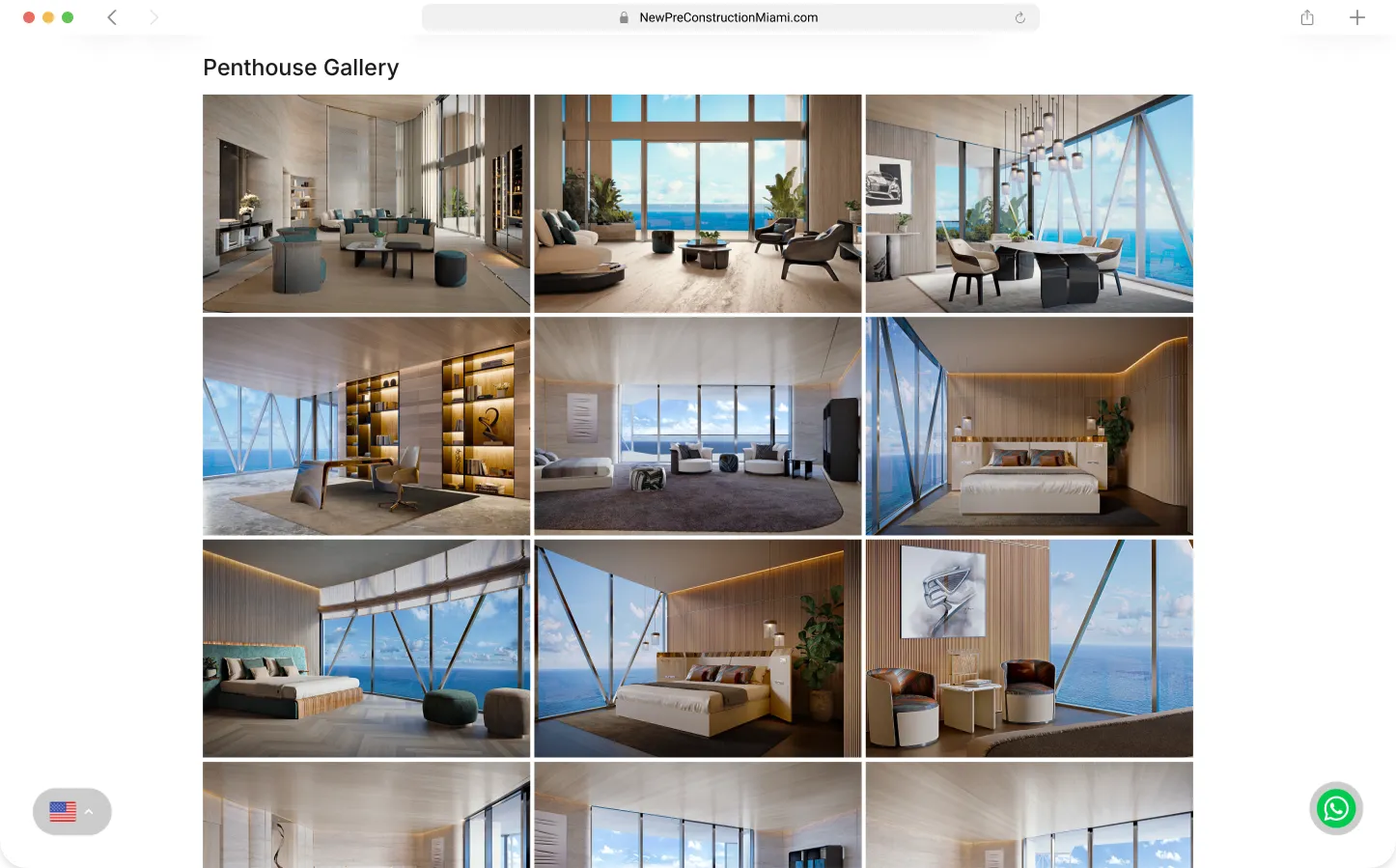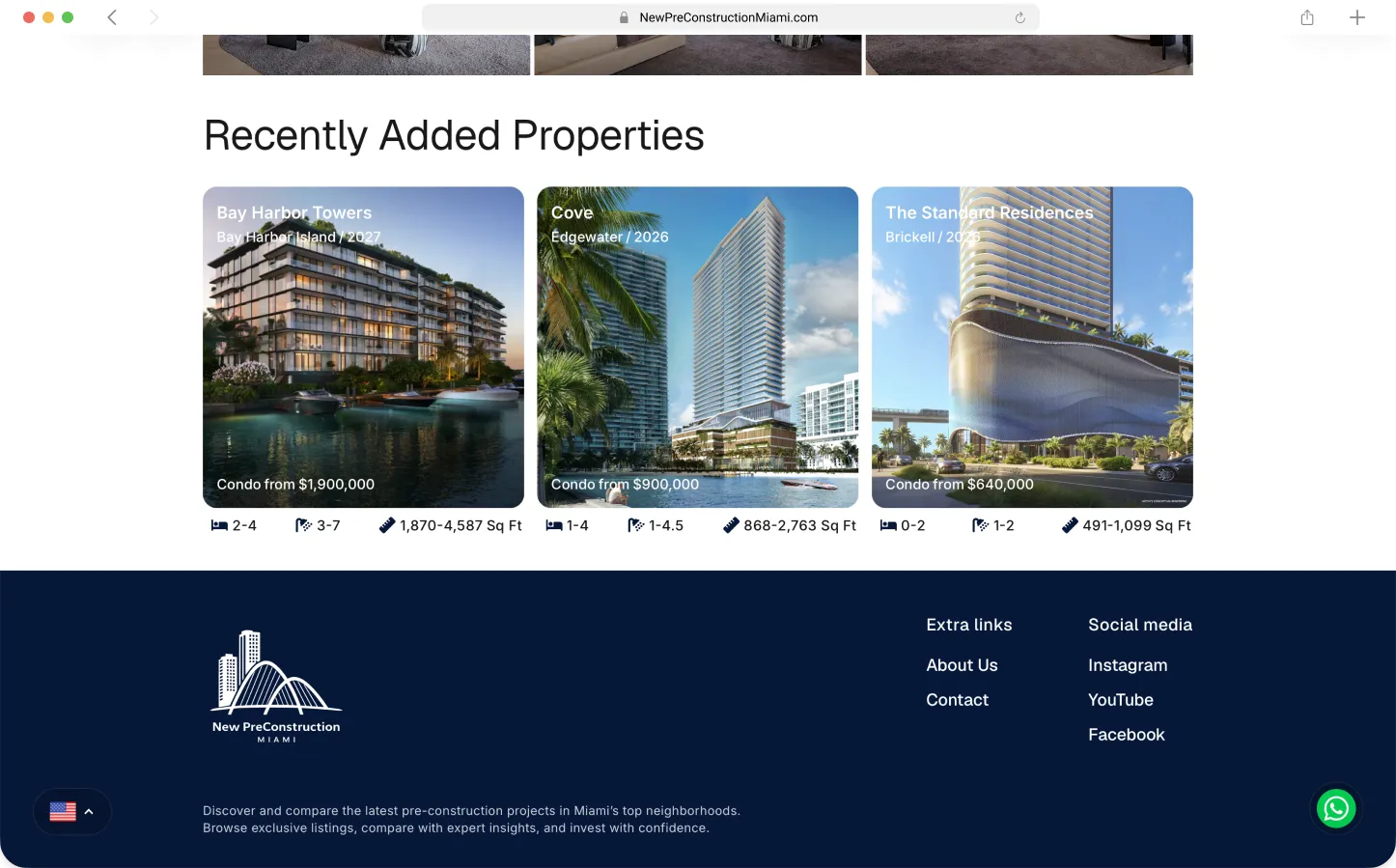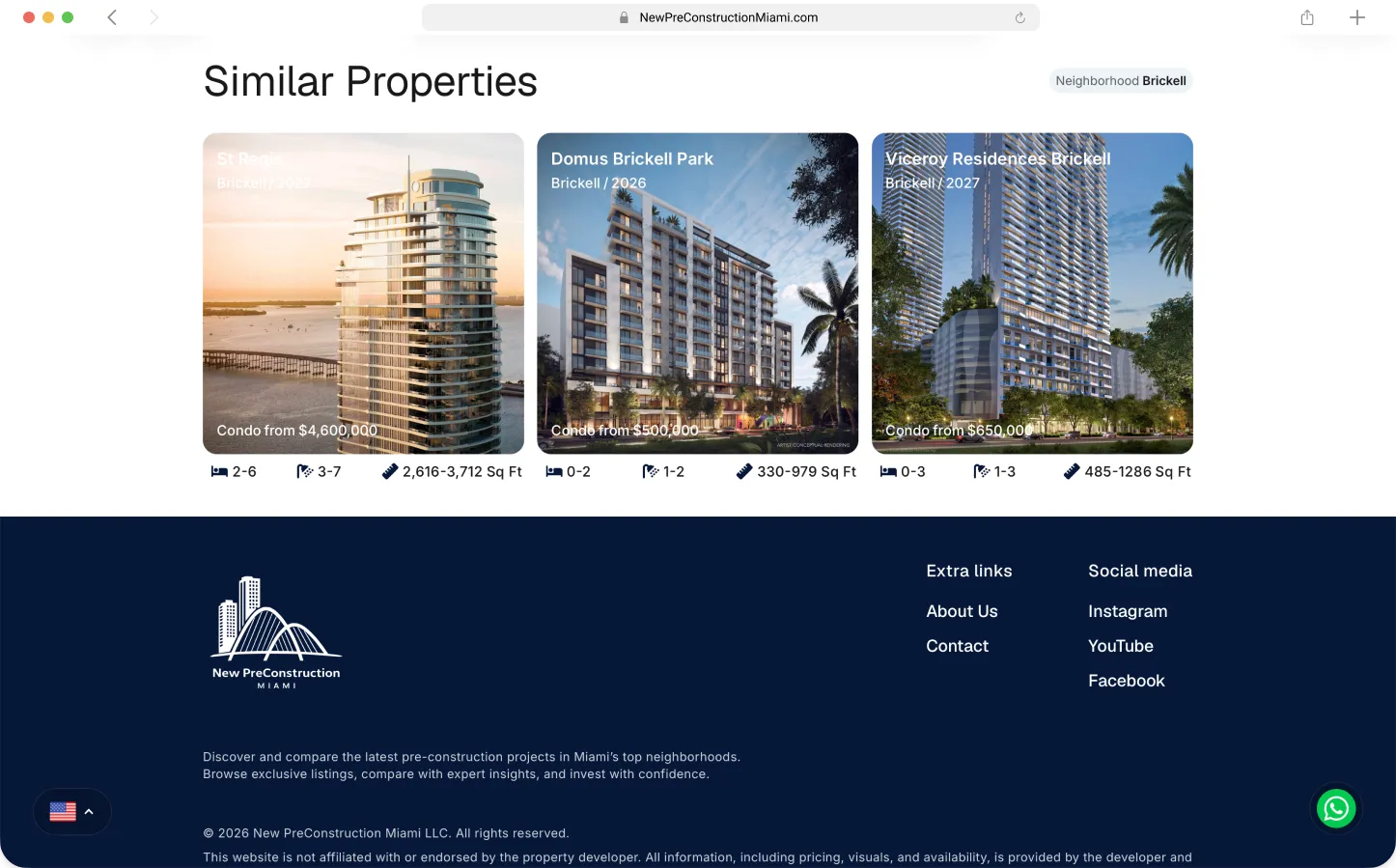
My Role
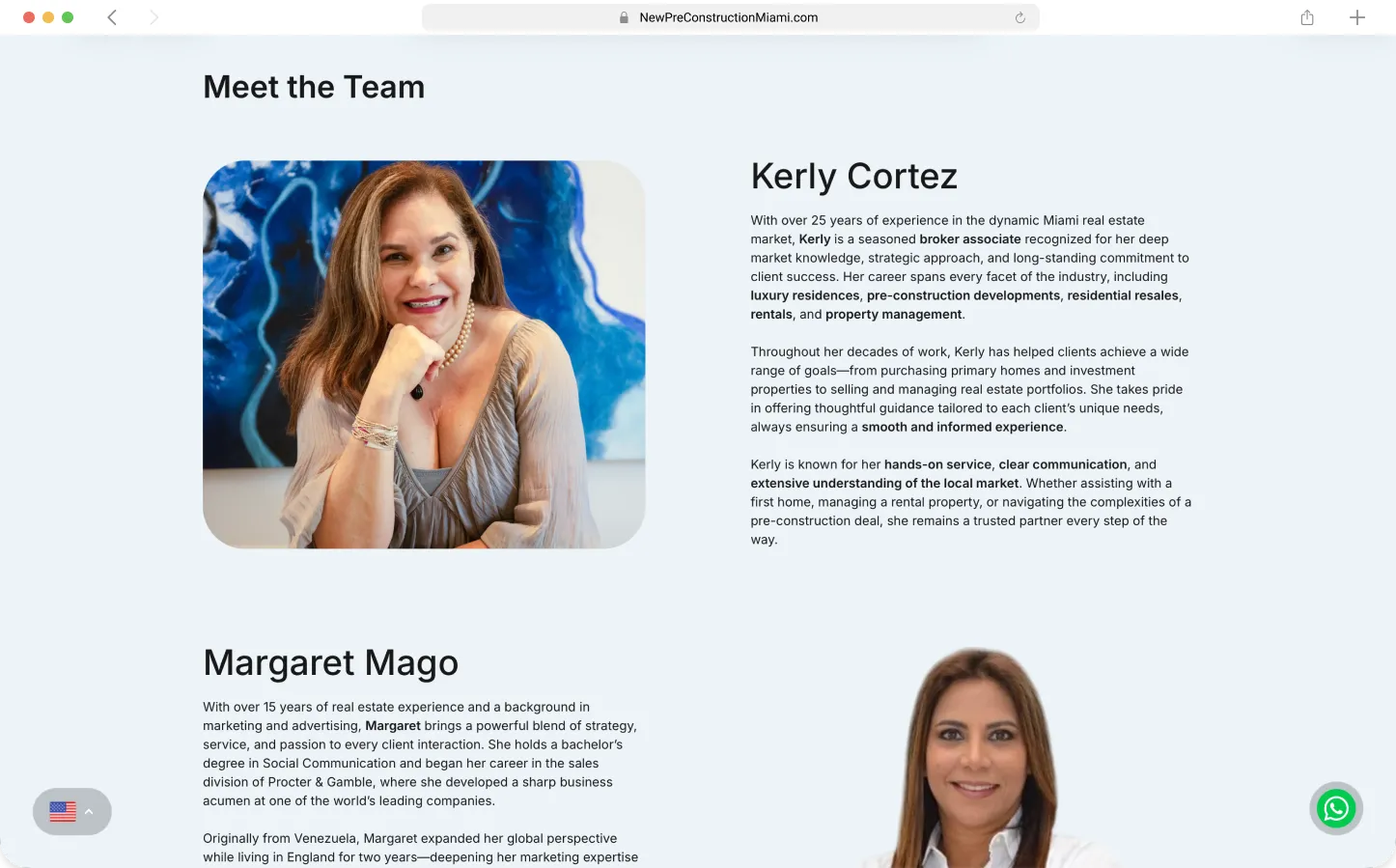
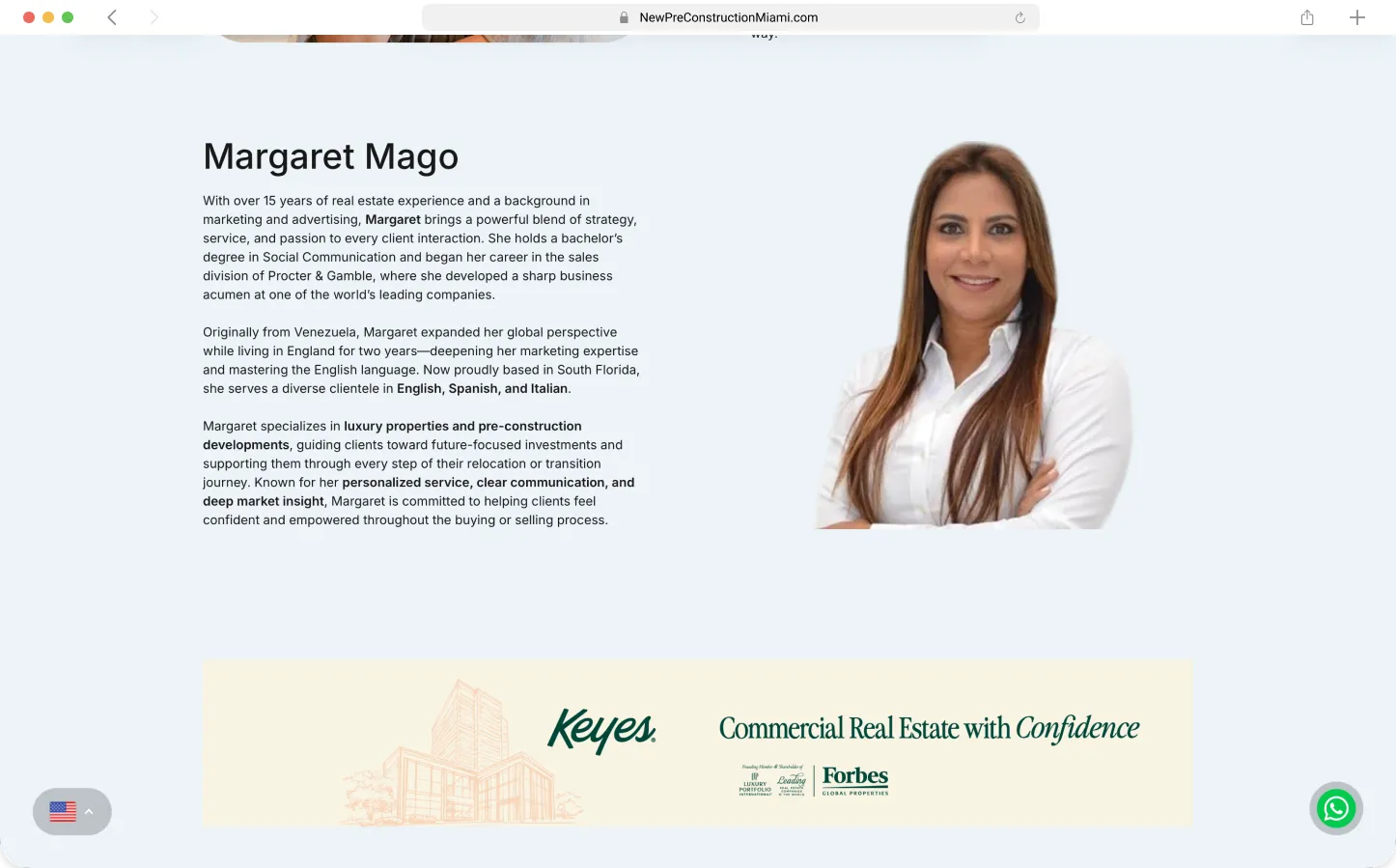
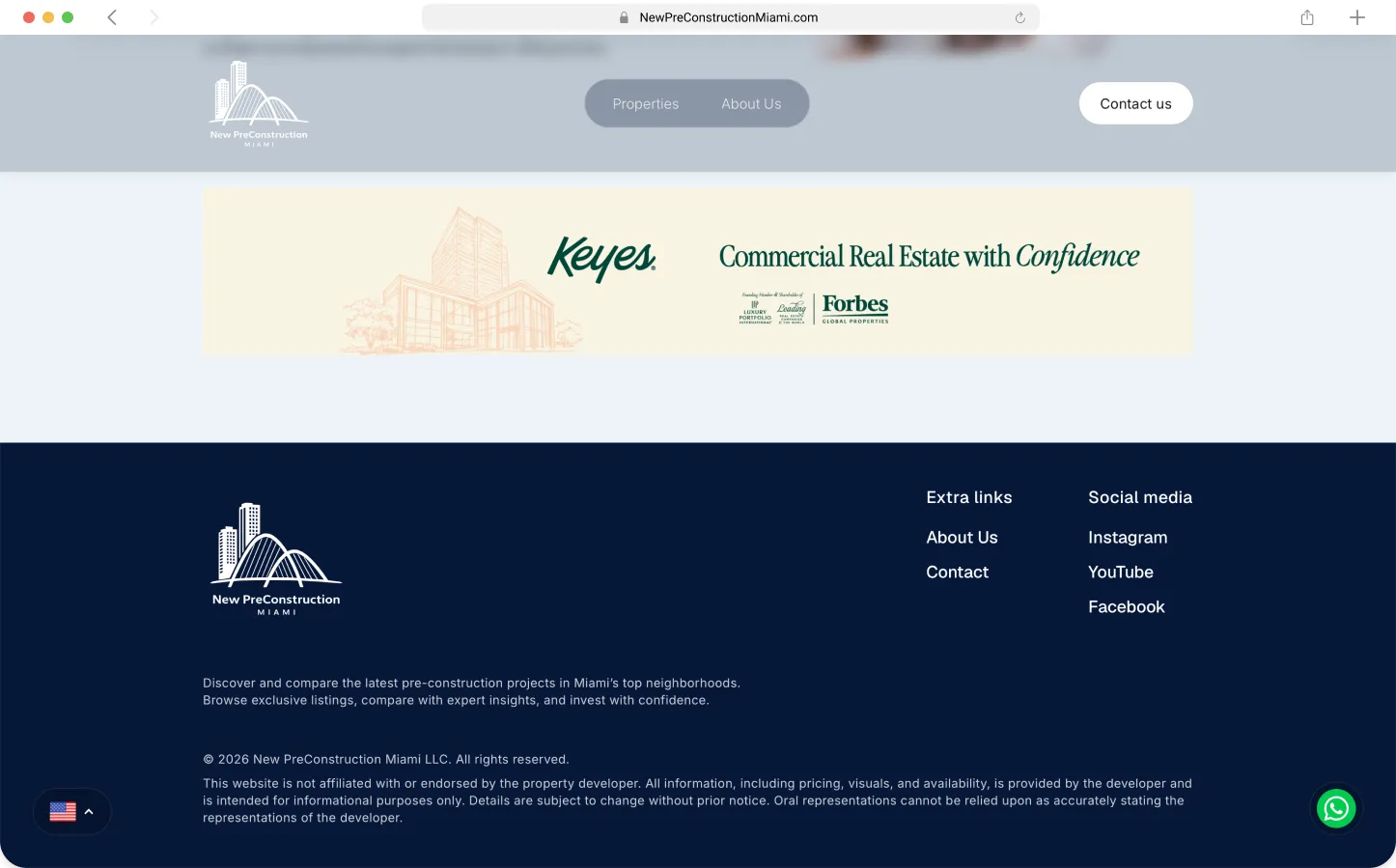
As the sole designer and developer, I owned the project end to end — from initial discovery and wireframing in Figma, to design execution and full production build in Webflow. I implemented custom code where needed to extend Webflow's native capabilities, and was responsible for all visual design decisions including branding, layout system, typography, and property card components. I worked directly with the client — a team of experienced Miami real estate agents — to align the product with their business goals and their buyers' expectations.
Background
The client, a team of licensed real estate agents specializing in the Miami luxury and pre-construction market, had no dedicated digital presence to showcase the developments they represented. Their communication with potential buyers was largely manual — sharing PDFs, property links, and details over email or WhatsApp. As Miami's pre-construction market grew increasingly competitive, they needed a platform that could position them as a trusted authority in the space and give buyers a seamless way to explore their portfolio of projects.
Problem
Without a centralized platform, agents had to spend significant time manually sending property information to each prospective buyer. There was no consistent, branded experience to present listings — which made it difficult to build credibility and convert interest into leads. Buyers also had no easy way to independently discover, browse, or compare multiple developments in one place, which created friction early in the decision-making process and required more touchpoints from the agents before a conversation could even begin.
Users
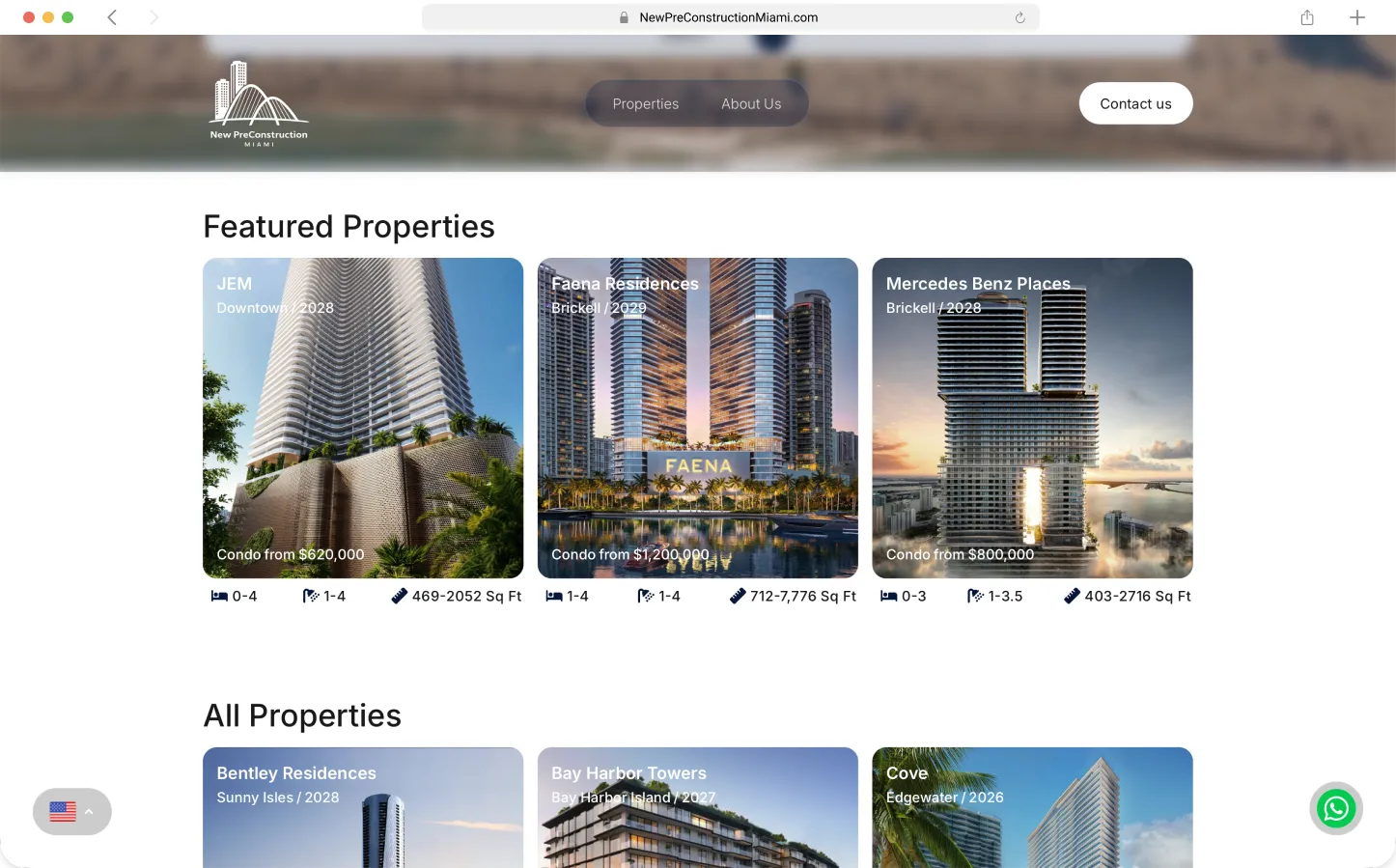
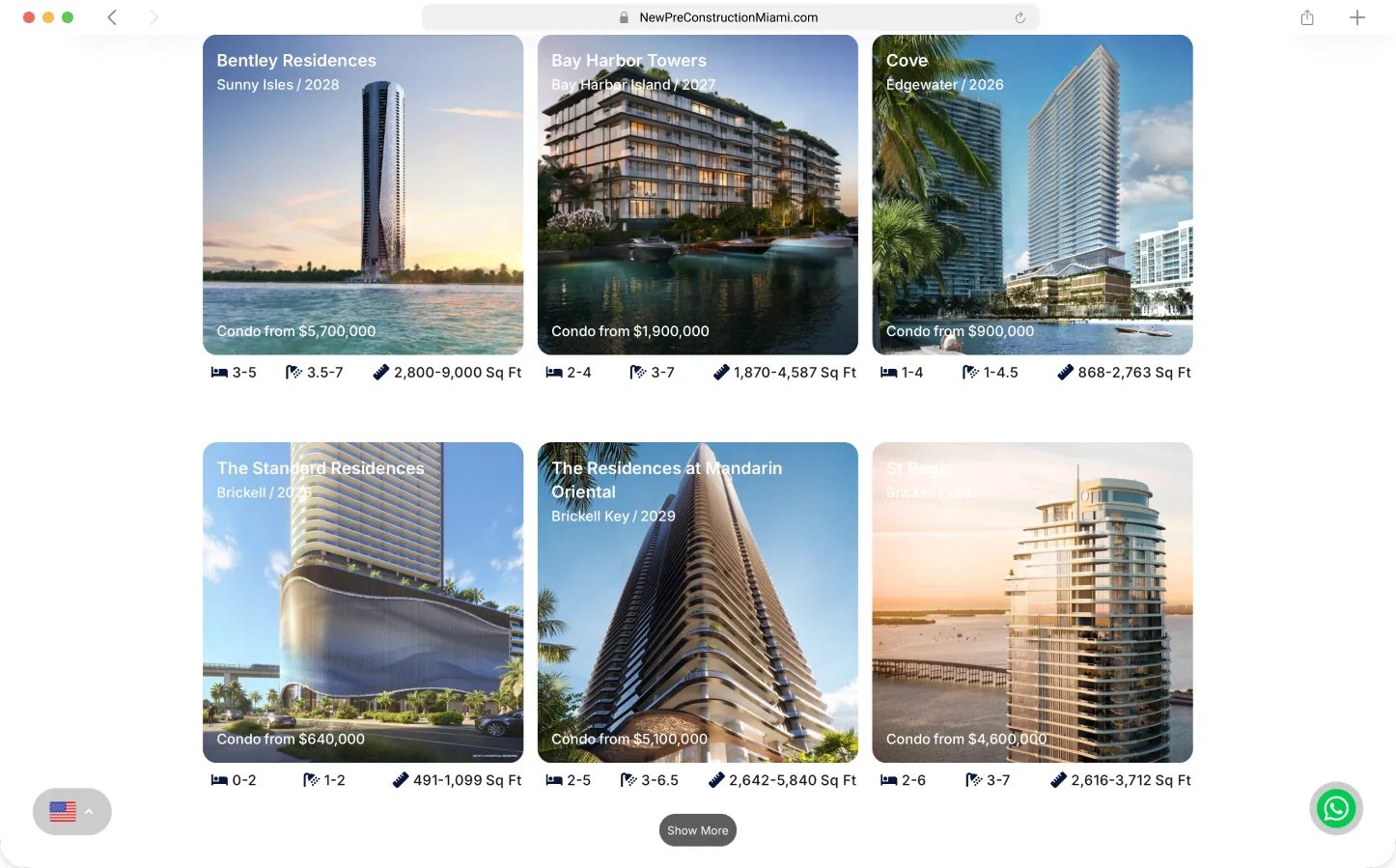
The primary users are buyers — both local and international — searching for a personal residence or investment property in South Florida's pre-construction market. These are high-intent users who are often evaluating multiple luxury developments simultaneously and need clear, reliable information to guide their decisions. They value professional presentation, easy access to key details like pricing, bedroom count, and square footage, and a direct path to connect with a knowledgeable agent when they're ready.
Solution
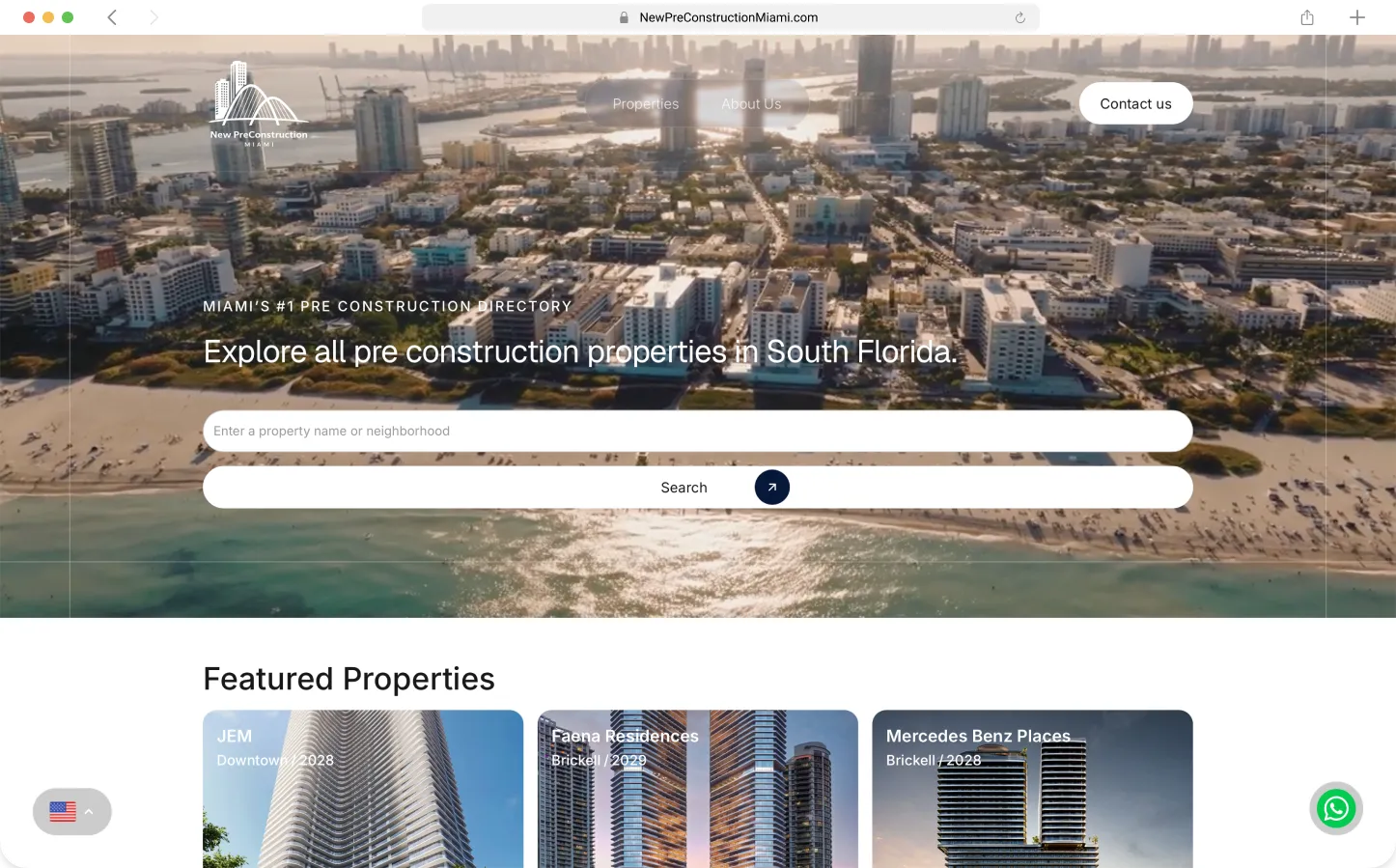
The design focused on clarity, trust, and discoverability. I started by mapping out the core user journey — from landing on the homepage to exploring a specific development and submitting a contact inquiry — and used this to define the information architecture and content hierarchy.
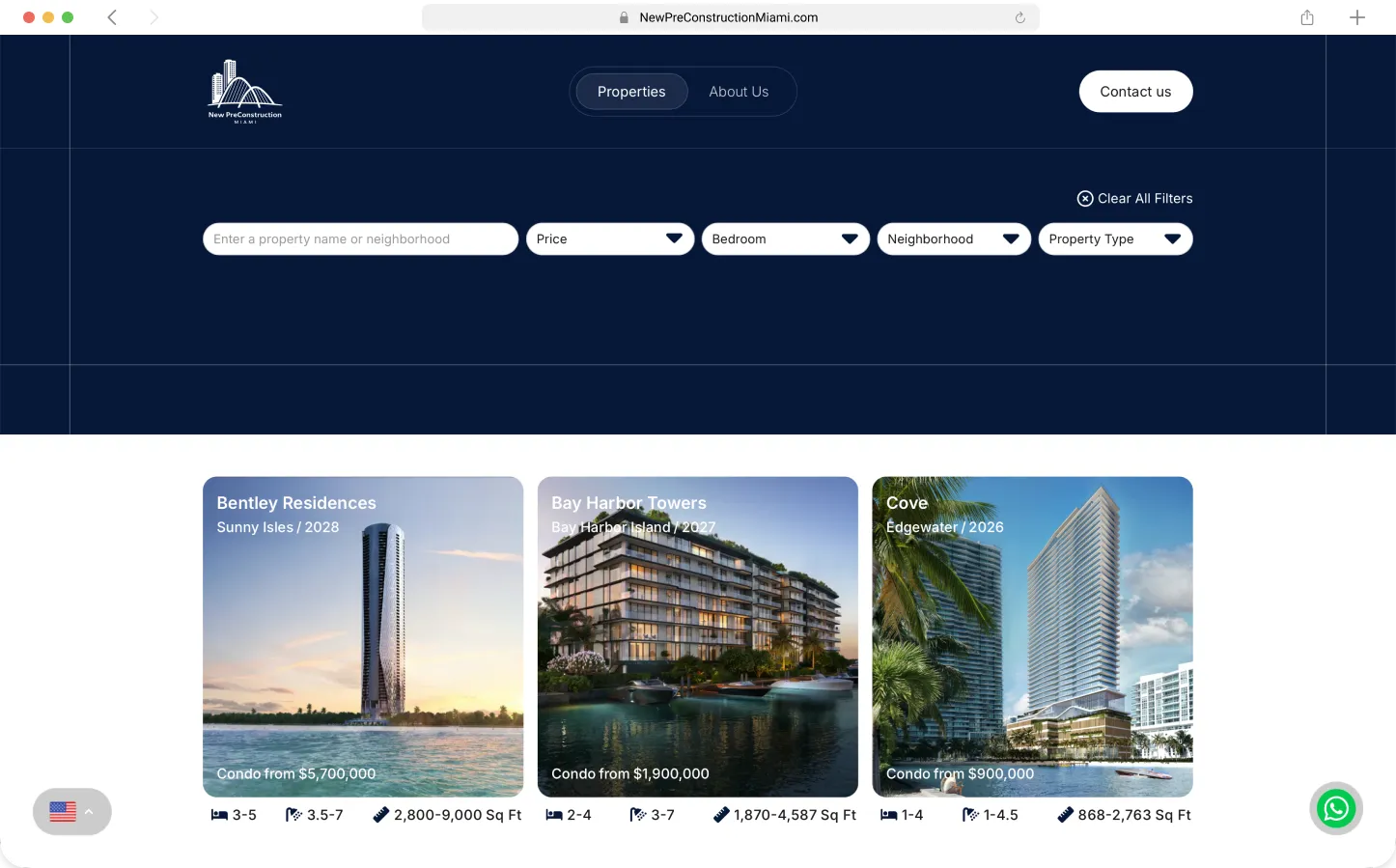
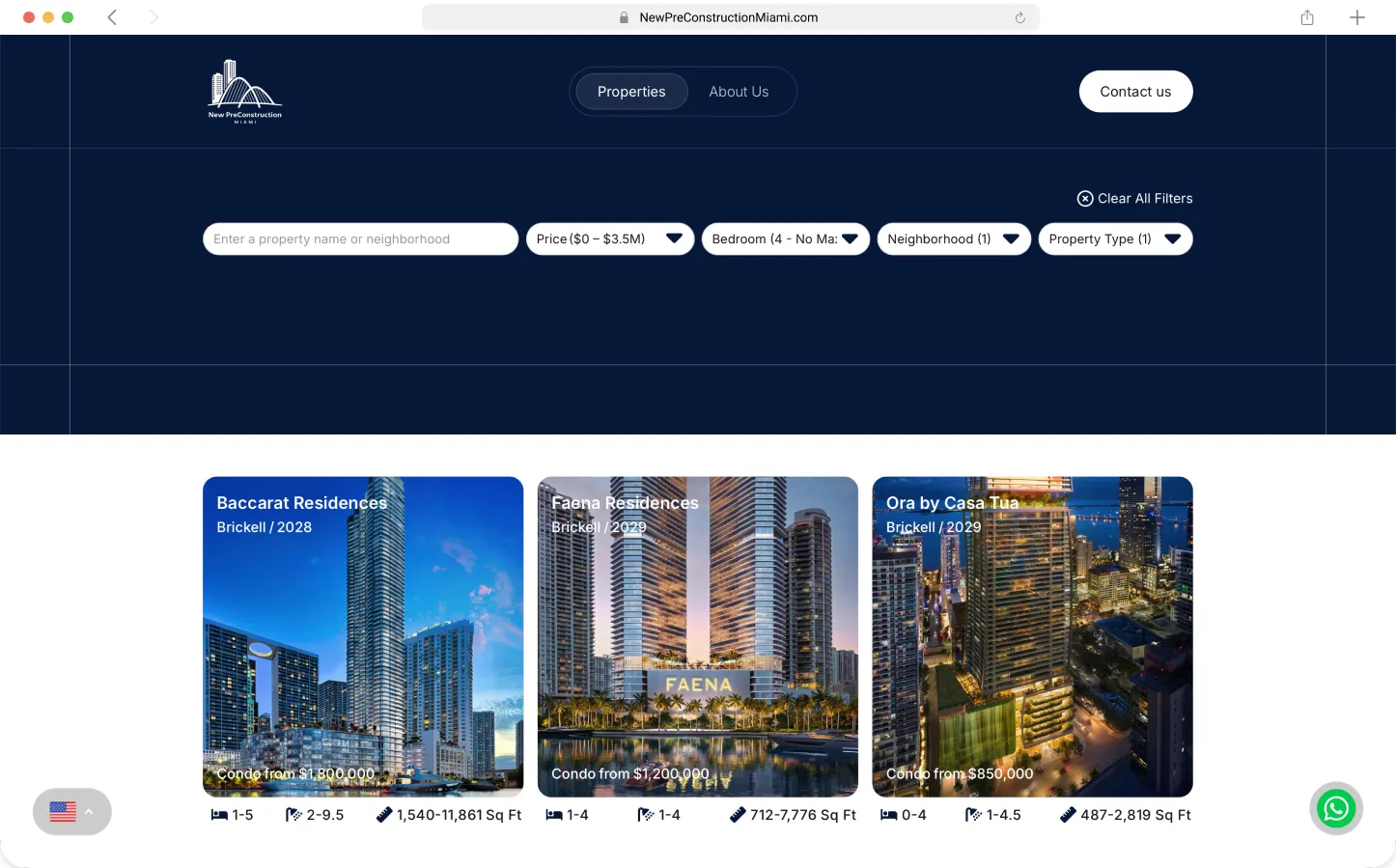
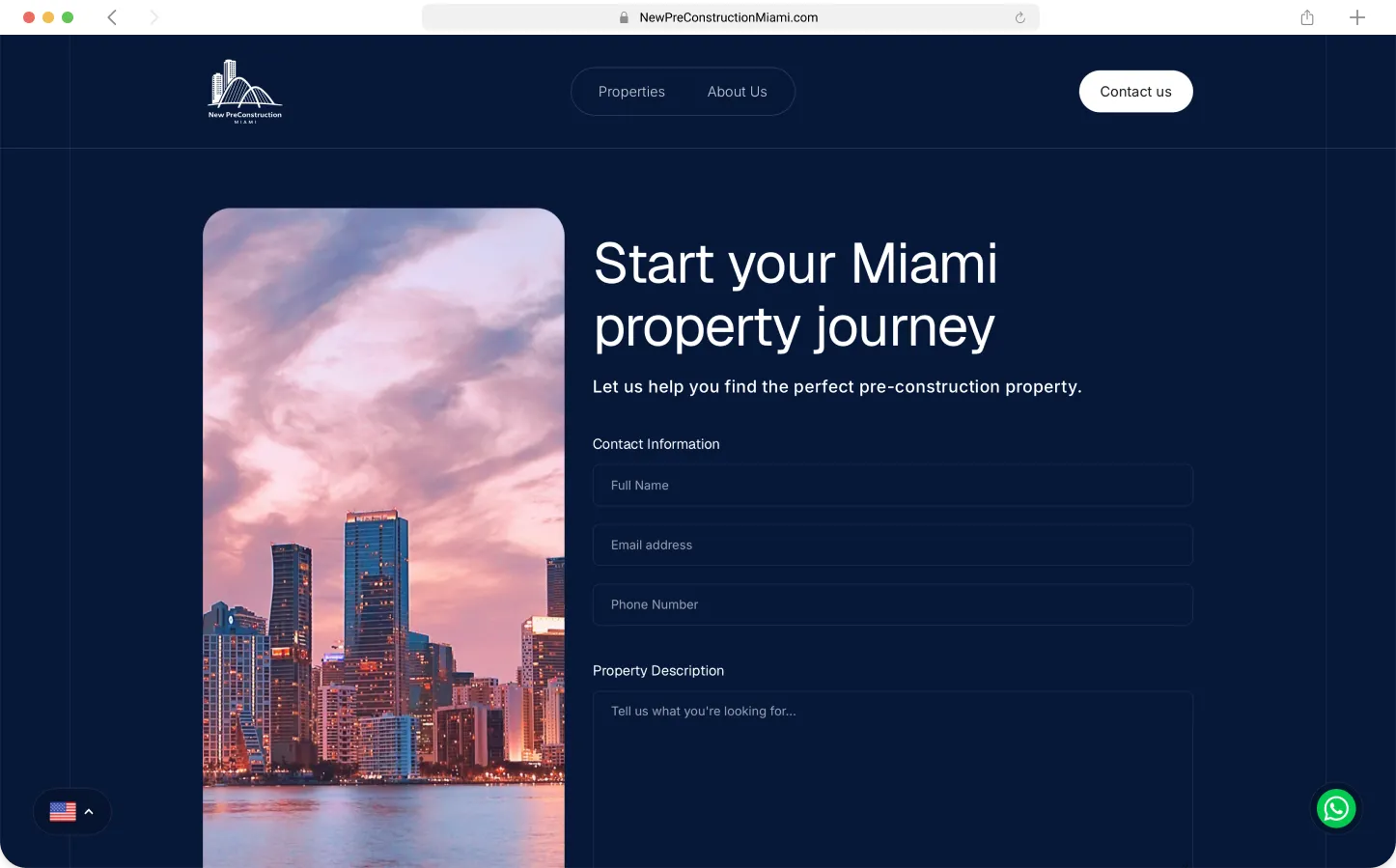
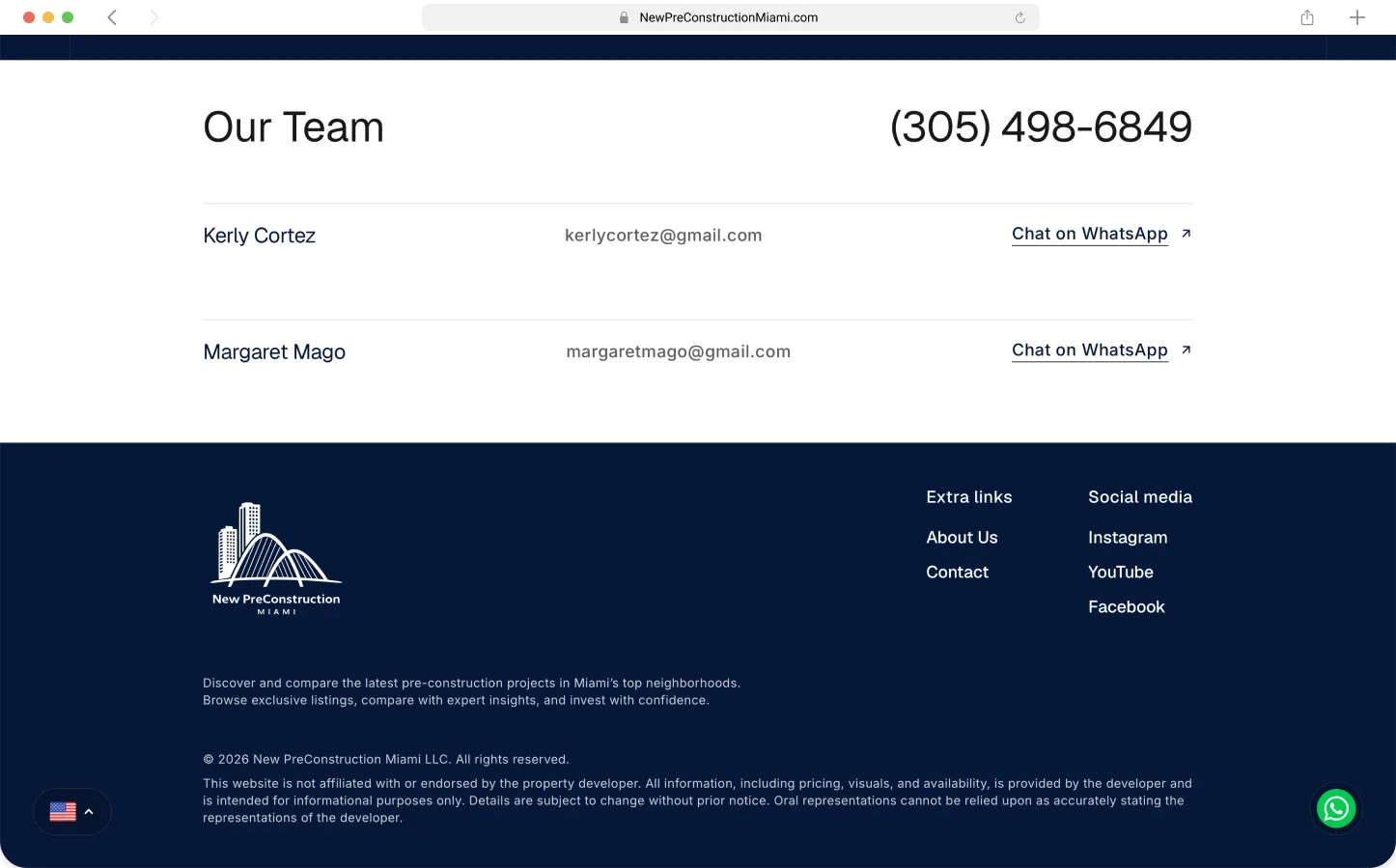
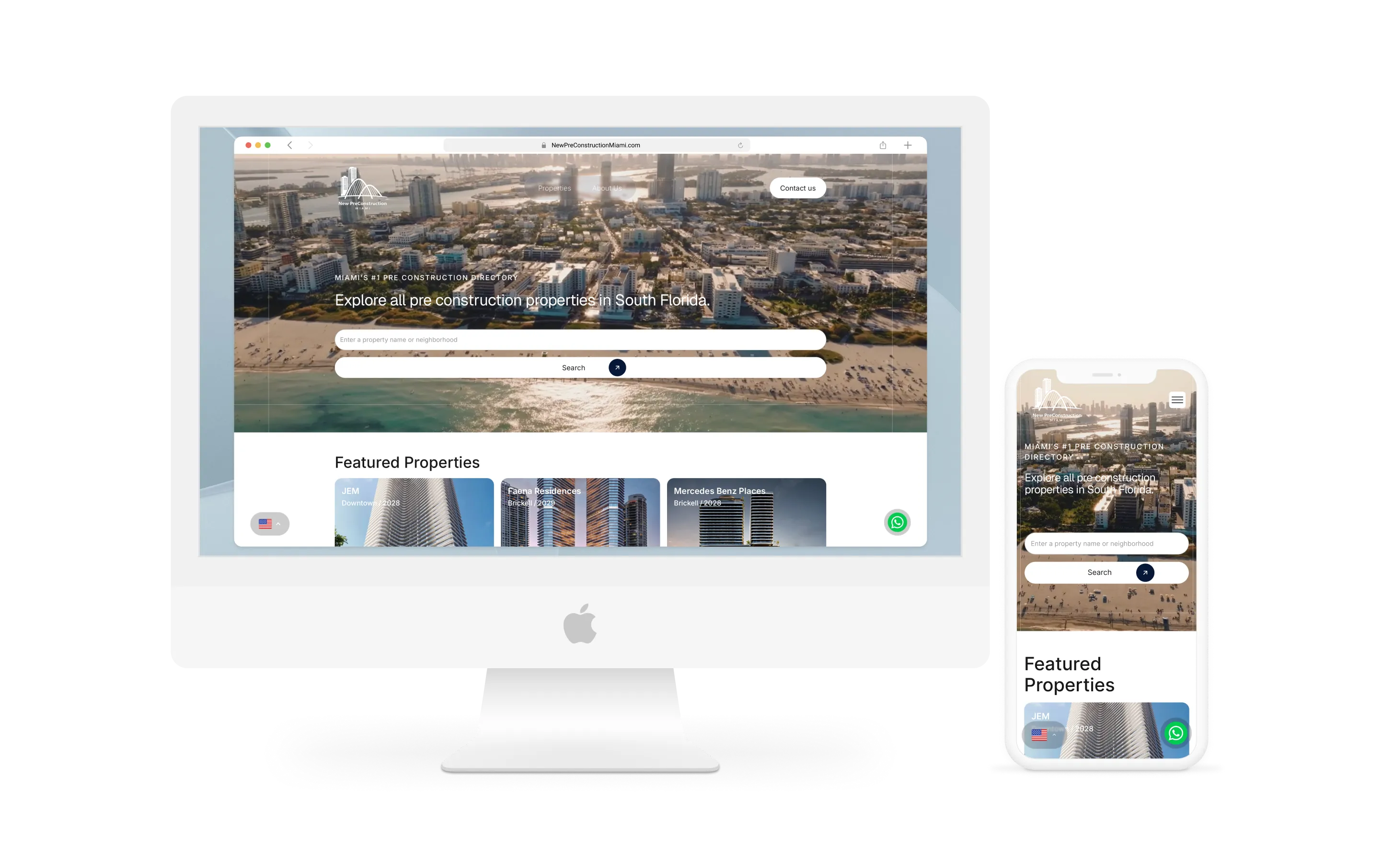
In Figma, I explored multiple directions for the visual identity before landing on a high-contrast, editorial aesthetic that reflected the luxury nature of the market while remaining approachable. The final design system included a dark-themed hero with video background, a featured properties carousel, a filterable property grid, and individual property detail pages with specs, imagery, and a lead capture form.
The build was done entirely in Webflow, with custom code extending functionality for the property search interaction and multilingual groundwork. Each property listing was structured as a CMS item, allowing the client to add and update listings independently without touching the design. The site was also built and optimized for both English and Spanish-speaking audiences, reflecting Miami's diverse buyer market.
Validation
Prior to launch, I conducted walkthroughs with the client team to ensure all property information was accurate and the inquiry flow was functioning correctly across devices. The site was tested across mobile, tablet, and desktop to ensure a consistent experience — given that a significant portion of luxury real estate browsing happens on mobile. The client reviewed the full CMS workflow and confirmed they could manage listings and content updates independently, which was a key requirement for long-term sustainability.
Impact
After launching, the platform gave the agents a professional, always-on digital presence that significantly reduced the manual effort required to share property information with prospects. Buyers could now self-serve — exploring listings, comparing developments, and reviewing key specs before ever reaching out — which meant the conversations agents were having were higher quality and further along in the decision process. The site established the brand as a credible, authoritative directory in the Miami pre-construction space, and generated a consistent stream of inbound lead inquiries directly through the platform.
Next Steps
The defined growth plan for the platform focuses on four key areas. First, continuing to expand the property directory with new listings as additional developments come to market. Second, building out advanced search and filtering functionality to allow buyers to narrow listings by neighborhood, price range, bedroom count, and delivery year. Third, launching a fully localized Spanish version of the site to better serve Miami's large Latin American buyer segment. Finally, integrating a CRM connection to route and track incoming leads more efficiently, giving the agent team better visibility into their pipeline and reducing response time.